
7.25.2014

7.24.2014
Postmatemática
When we are learning the world, we know things we cannot say how we know. When we are relearning the world in the aftermath of a loss, we feel things we had almost forgotten, old things, beneath the seat of reason.

When we talk about love, we go back to the start, to pinpoint the moment of free fall. But this story is the story of an ending, of death, and it has no beginning.
O'Rourke
When we talk about love, we go back to the start, to pinpoint the moment of free fall. But this story is the story of an ending, of death, and it has no beginning.
O'Rourke
7.23.2014

7.22.2014
Unseemly

But now it seemed to me that Hamlet was moody and irascible in no small part because he is grieving: his father has just died. He is radically dislocated, stumbling through the days while the rest of the world acts as if nothing important has changed.
For the trouble is not just that Hamlet is sad; it is that everyone around him is unnerved by his grief. When Hamlet comes onstage, his uncle greets him with the worst question you can ask a grieving person: “How is it that the clouds still hang on you?” Hamlet’s mother, Gertrude, tries to get him to see that his loss is “common.”
No wonder Hamlet is angry and cagey; he is told that how he feels is “unmanly” and unseemly.
Meghan O'Rourke
Brain Pickings
7.21.2014

7.20.2014
This isn't happiness

“The drink made past happy things contemporary with the present, as if they were still going on, contemporary even with the future as if they were about to happen again.”
— F. Scott Fitzgerald, Tender is the Night
7.18.2014
The Real World Plainly Bore Us

Books whose blueness penetrates the pages between their covers are books which, without depriving us of the comfort of our own commode or the sight of our liberal selves, place us inside a manufactured privacy. This privacy is really not that of someone else. It must be artificial because the real world plainly bores us. Impatient, we can’t wait for nature to take its course.
When we take our textual tour through the slums, we want crime, violence, starvation, disease, not hours of just sitting around. We want the world to be the world we read about in the papers; all news. What good is my ring if the couple I am using it to spy on make love in darkness once a month, and then are quick, inept, and silent? Better rob banks. The money is always there. What good is my peek at her pubic hair if I must also see the red lines made by her panties, the pimples on her ramp, broken veins like the print of a lavender thumb, the stepped-on look of a day’s-end muff? I’ve that at home. No. Vishnu is blue in all his depictions. Lord Krishna too. Yes. The blue we bathe in is the blue we breathe. The blue we breathe, I fear, is what we want from life and only find in fiction. For the voyeur, fiction is what’s called going all the way.
The privacy which a book makes public is nevertheless made public very privately—not like the billboard which shouts at the street, or the movie whose image is so open we need darkness to cover the clad-ass and naked face that’s settled in our seat. A fictional text enters consciousness so discreetly it is never seen outdoors . . . from house to house it travels like a whore . . . so even on a common carrier I can quite safely fill my thoughts with obscene adjectives and dirty verbs although the place I occupy is thigh-sided by a parson.
We like that.
Thus between the aesthetically irrelevant demands of the reader and the aesthetically crippling personal worries of the writer, sexuality reaches literature as an idee fixe, an artifically sweetened distortion or an outright lie, while the literature itself leaks quality like a ruptured pipe.
William H. Gass
7.17.2014

Esperanza
Hope is the result of confusing the desire that something should take place with the probability that it will. Perhaps no man is free from this folly of the heart, which deranges the intellect’s correct appreciation of probability to such an extent that, if the chances are a thousand to one against it, yet the event is thought a likely one. Still in spite of this, a sudden misfortune is like a death stroke, whilst a hope that is always disappointed and still never dies, is like death by prolonged torture.
He who has lost all hope has also lost all fear; this is the meaning of the expression “desperate.” It is natural to a man to believe what he wishes to be true, and to believe it because he wishes it, If this characteristic of our nature, at once beneficial and assuaging, is rooted out by many hard blows of fate, and a man comes, conversely, to a condition in which he believes a thing must happen because he does not wish it, and what he wishes to happen can never be, just because he wishes it, this is in reality the state described as “desperation.”
Schopenhauer
He who has lost all hope has also lost all fear; this is the meaning of the expression “desperate.” It is natural to a man to believe what he wishes to be true, and to believe it because he wishes it, If this characteristic of our nature, at once beneficial and assuaging, is rooted out by many hard blows of fate, and a man comes, conversely, to a condition in which he believes a thing must happen because he does not wish it, and what he wishes to happen can never be, just because he wishes it, this is in reality the state described as “desperation.”
Schopenhauer
7.16.2014
LCD

Me gusta mirar mi computadora hacía arriba,
como en un pedestal,
me gusta mirar el monitor con el cuello doblado,
como a un dios,
o una obra de arte,
me gusta que se imponga ante mi,
también me gusta ver insectos agonizando al filo de la tortilla de mi taco,
con la cabeza gacha,
justo en la orilla,
carne, insecto y maíz,
no muertos,
pero agonizando.
Padre Muerto

Patricide:
Patricide is a bad idea, first because it is contrary to law and custom and second because it proves, beyond a doubt, that the father’s every fluted accusation against you was correct: you are a thoroughly bad individual, a patricide! — member of a class of persons universally ill-regarded. It is all right to feel this hot emotion, but not to act upon it. And it is not necessary. It is not necessary to slay your father, time will slay him, that is a virtual certainty. Your true task lies elsewhere. Your true task, as a son, is to reproduce every one of the enormities touched upon in this manual, but in attenuated form. You must become your father, but a paler, weaker version of him. The enormities go with the job, but close study will allow you to perform the job less well than it has previously been done, thus moving toward a golden age of decency, quiet, and calmed fevers. Your contribution will not be a small one, but “small” is one of the concepts that you should shoot for. If your father was a captain in Battery D, then content yourself with a corporalship in the same battery. Do not attend the annual reunions. Do not drink beer or sing songs at the reunions. Begin by whispering, in front of a mirror, for thirty minutes a day. Then tie your hands behind your back for thirty minutes a day, or get someone else to do this for you. Then, choose one of your most deeply held beliefs, such as the belief that your honors and awards have something to do with you, and abjure it. Friends will help you abjure it, and can be telephoned if you begin to backslide. You see the pattern, put it into practice. Fatherhood can be, if not conquered, at least “turned down” in this generation — by the combined efforts of all of us together.
Donald Barthelme // The Dead Father.
7.15.2014
Suficiente
There are always meaningful songs for somebody. People are doing their courting, people are finding their wives, people are making babies, people are washing their dishes, people are getting through the day, with songs that we may find insignificant. But their significance is affirmed by others. There’s always someone affirming the significance of a song by taking a woman into his arms or by getting through the night. That’s what dignifies the song. Songs don’t dignify human activity. Human activity dignifies the song.
It [has] to do with two things. One is economic urgency. I just never made enough money to say, “Oh, man, I think I’m gonna get a yacht now and scuba-dive.” I never had those kinds of funds available to me to make radical decisions about what I might do in life. Besides that, I was trained in what later became known as the Montreal School of Poetry. Before there were prizes, before there were grants, before there were even girls who cared about what I did. We would meet, a loosely defined group of people. There were no prizes, as I said, no rewards other than the work itself. We would read each other poems. We were passionately involved with poems and our lives were involved with this occupation…
We had in our minds the examples of poets who continued to work their whole lives. There was never any sense of a raid on the marketplace, that you should come up with a hit and get out. That kind of sensibility simply did not take root in my mind until very recently…
So I always had the sense of being in this for keeps, if your health lasts you. And you’re fortunate enough to have the days at your disposal so you can keep on doing this. I never had the sense that there was an end. That there was a retirement or that there was a jackpot.

If I knew where the good songs came from, I’d go there more often. It’s a mysterious condition. It’s much like the life of a Catholic nun. You’re married to a mystery.
BrainPickings
It [has] to do with two things. One is economic urgency. I just never made enough money to say, “Oh, man, I think I’m gonna get a yacht now and scuba-dive.” I never had those kinds of funds available to me to make radical decisions about what I might do in life. Besides that, I was trained in what later became known as the Montreal School of Poetry. Before there were prizes, before there were grants, before there were even girls who cared about what I did. We would meet, a loosely defined group of people. There were no prizes, as I said, no rewards other than the work itself. We would read each other poems. We were passionately involved with poems and our lives were involved with this occupation…
We had in our minds the examples of poets who continued to work their whole lives. There was never any sense of a raid on the marketplace, that you should come up with a hit and get out. That kind of sensibility simply did not take root in my mind until very recently…
So I always had the sense of being in this for keeps, if your health lasts you. And you’re fortunate enough to have the days at your disposal so you can keep on doing this. I never had the sense that there was an end. That there was a retirement or that there was a jackpot.
If I knew where the good songs came from, I’d go there more often. It’s a mysterious condition. It’s much like the life of a Catholic nun. You’re married to a mystery.
BrainPickings
7.14.2014
Venenos Lentos

7.11.2014
Complaint

Alasdair Gray
7.10.2014
Laugh

Laugh, and the world laughs with you;
Weep, and you weep alone.
For the sad old earth must borrow it's mirth,
But has trouble enough of its own.
Sing, and the hills will answer;
Sigh, it is lost on the air.
The echoes bound to a joyful sound,
But shrink from voicing care.
Rejoice, and men will seek you;
Grieve, and they turn and go.
They want full measure of all your pleasure,
But they do not need your woe.
Be glad, and your friends are many;
Be sad, and you lose them all.
There are none to decline your nectared wine,
But alone you must drink life's gall.
Feast, and your halls are crowded;
Fast, and the world goes by.
Succeed and give, and it helps you live,
But no man can help you die.
There is room in the halls of pleasure
For a long and lordly train,
But one by one we must all file on
Through the narrow aisles of pain.

7.09.2014
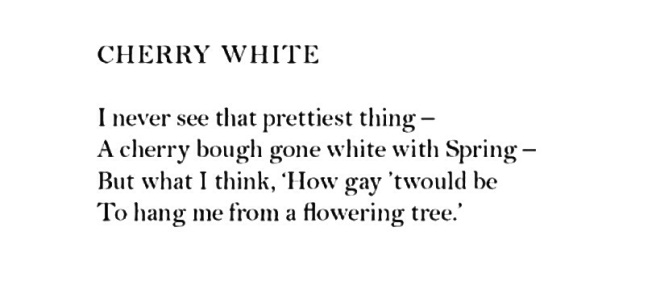
Lanark
A story can always end happily by stopping at a cheerful moment. Of course in nature the only end is death, but death hardly ever happens when people are at their best. That is why we like tragedies. They show men ending energetically with their wits about them and deserving to do it.
-Alasdair Gray
-Alasdair Gray
7.08.2014
El temblor del Velo

My first meeting with Oscar Wilde was an astonishment. I never before heard a man talking with perfect sentences, as if he had written them all over night with labour and yet all spontaneous. There was present that night at Henley’s, by right of propinquity or of accident, a man full of the secret spite of dulness, who interrupted from time to time, and always to check or disorder thought; and I noticed with what mastery he was foiled and thrown. I noticed, too, that the impression of artificiality that I think all Wilde’s listeners have recorded came from the perfect rounding of the sentences and from the deliberation that made it possible. That very impression helped him, as the effect of metre, or of the antithetical prose of the seventeenth century, which is itself a true metre, helped its writers, for he could pass without incongruity from some unforeseen, swift stroke of wit to elaborate reverie. I heard him say a few nights later: “Give me The Winter’s Tale, ‘Daffodils that come before the swallow dare’ but not King Lear. What is King Lear but poor life staggering in the fog?” and the slow, carefully modulated cadence sounded natural to my ears. That first night he praised Walter Pater’s Studies in the History of the Renaissance: “It is my golden book; I never travel anywhere without it; but it is the very flower of decadence: the last trumpet should have sounded the moment it was written.” “But,” said the dull man, “would you not have given us time to read it?” “Oh no,” was the retort, “there would have been plenty of time afterwards—in either world.” I think he seemed to us, baffled as we were by youth, or by infirmity, a triumphant figure, and to some of us a figure from another age, an audacious Italian fifteenth century figure. A few weeks before I had heard one of my father’s friends, an official in a publishing firm that had employed both Wilde and Henley as editors, blaming Henley who was “no use except under control” and praising Wilde, “so indolent but such a genius”; and now the firm became the topic of our talk. “How often do you go to the office?” said Henley. “I used to go three times a week,” said Wilde, “for an hour a day but I have since struck off one of the days.” “My God,” said Henley, “I went five times a week for five hours a day and when I wanted to strike off a day they had a special committee meeting.” “Furthermore,” was Wilde’s answer, “I never answered their letters. I have known men come to London full of bright prospects and seen themcomplete wrecks in a few months through a habit of answering letters.” He too knew how to keep our elders in their place, and his method was plainly the more successful, for Henley had been dismissed. “No he is not an aesthete,” Henley commented later, being somewhat embarrassed by Wilde’s Pre-Raphaelite entanglement; “one soon finds that he is a scholar and a gentleman.” And when I dined with Wilde a few days afterwards he began at once, “I had to strain every nerve to equal that man at all”; and I was too loyal to speak my thought: “You and not he said all the brilliant things.” He like the rest of us had felt the strain of an intensity that seemed to hold life at the point of drama. He had said on that first meeting “The basis of literary friendship is mixing the poisoned bowl”; and for a few weeks Henley and he became close friends till, the astonishment of their meeting over, diversity of character and ambition pushed them apart, and, with half the cavern helping, Henley began mixing the poisoned bowl for Wilde. Yet Henley never wholly lost that first admiration, for after Wilde’s downfall he said to me: “Why did he do it? I told my lads to attack him and yet we might have fought under his banner.”
From W.B. Yeats’s autobiography, The Trembling of the Veil.
7.07.2014
7.04.2014
7.03.2014
Like a Radio

“People are afraid of themselves, of their own reality; their feelings most of all. People talk about how great love is, but that's bullshit. Love hurts. Feelings are disturbing. People are taught that pain is evil and dangerous. How can they deal with love if they're afraid to feel? Pain is meant to wake us up. People try to hide their pain. But they're wrong. Pain is something to carry, like a radio. You feel your strength in the experience of pain. It's all in how you carry it. That's what matters. Pain is a feeling. Your feelings are a part of you. Your own reality. If you feel ashamed of them, and hide them, you're letting society destroy your reality. You should stand up for your right to feel your pain.”
James Douglas Morrison (December 8, 1943 – July 3, 1971)
7.02.2014

7.01.2014
Buscaglia: What Life is All About
//Most of us continue to behave as though love is not learned but lies dormant in each human being and simply awaits some mystical age of awareness to emerge in full bloom. Many wait for this age forever. We seem to refuse to face the obvious fact that most of us spend our lives trying to find love, trying to live in it, and dying without ever truly discovering it.
//Love is a learned, emotional reaction. It is a response to a learned group of stimuli and behaviors. Like all learned behavior, it is [affected] by the interaction of the learner with his environment, the person’s learning ability, and the type and strength of the reinforcers present; that is, which people respond, how they respond and to what degree they respond, to his expressed love.
Love is a dynamic interaction, lived every second of our lives, all of our lives.

//Love is an emotion, that is true. But it is also a “response” to an emotion and, therefore, an “active” expression of what is felt. Love is not learned by osmosis. It is actually acted out and acted upon.
//In order to exist at some level of comfort, [the child] must accept what is offered, often without questions. In fact, he has few questions for he has little knowledge and nothing to compare it to. He is spoon-fed his world, handed the tools to meet its requirements and the symbols with which to organize it. He is even taught what things are significant, what sounds to listen for and what they mean, and what is valueless. In other words, he is taught to be a particular type of human lover. To be loved in return, he need but listen, see and respond as others do. It is a simple matter but the cost to his individuality is great.

//Neither the love of self — what educators call self-respect — nor love of others — responsibility and love for his fellow man — can ever be taught in our present educational system. Teachers are too busy “managing” to be “creating.” As Albert Einstein said, “It is nothing short of a miracle that instruction today has not strangled the holy curiosity of inquiry. For this delicate little plant lies mostly in need of freedom without which it will fall into rack and ruin and die without fail.”
So the individual, now fully grown, leaves our schools confused, lonely, alienated, lost, angry, but with a mind full of isolated, meaningless facts which together are laughingly called an education. He knows neither who he is, where he is or how he got there. He has no concept of where he’s going, how to arrive there nor what he’ll do when he gets there. He has no idea what he has, what he wants, nor how to develop it. In essence, he’s a type of robot — old before his time, living in the past, confused by the present, frightened by the future, much like the teachers who made him.
Nowhere along the way has he been directly exposed to love as a learned phenomenon. What he has learned of love he has come upon indirectly, by chance or by trial and error. His greatest exposure and often his only teaching has been through the commercial mass media which has always exploited love for its own ends.
[…]
You are assured that love means running together through a meadow, lighting two cigarettes in the dark or applying a deodorant daily. You are given the idea that love just “happens,” and usually at first sight. You don’t have to work at love — love requires no teacher — you just fall into love — if you follow the right rules, and play the “game” correctly.

//Most of us never learn to love at all. We play at love, imitate lovers, treat love as a game. Is it any wonder so many of us are dying of loneliness, feel anxious and unfulfilled, even in seemingly close relationships, and are always looking elsewhere for something more which we feel must certainly be there? “Is that all there is?” the song asks.
There is something else. It’s simply this — the limitless potential of love within each person eager to be recognized, waiting to be developed, learning to grow.
//It’s never too late to learn anything for which you have a potential. If you want to learn to love, then you must start the process of finding out what it is, what qualities make up a loving person and how these are developed. Each person has the potential for love. But potential is never realized without work. This does not mean pain. Love, especially, is learned best in wonder, in joy, in peace, in living.
Brain Pickings
//Love is a learned, emotional reaction. It is a response to a learned group of stimuli and behaviors. Like all learned behavior, it is [affected] by the interaction of the learner with his environment, the person’s learning ability, and the type and strength of the reinforcers present; that is, which people respond, how they respond and to what degree they respond, to his expressed love.
Love is a dynamic interaction, lived every second of our lives, all of our lives.
//Love is an emotion, that is true. But it is also a “response” to an emotion and, therefore, an “active” expression of what is felt. Love is not learned by osmosis. It is actually acted out and acted upon.
//In order to exist at some level of comfort, [the child] must accept what is offered, often without questions. In fact, he has few questions for he has little knowledge and nothing to compare it to. He is spoon-fed his world, handed the tools to meet its requirements and the symbols with which to organize it. He is even taught what things are significant, what sounds to listen for and what they mean, and what is valueless. In other words, he is taught to be a particular type of human lover. To be loved in return, he need but listen, see and respond as others do. It is a simple matter but the cost to his individuality is great.
//Neither the love of self — what educators call self-respect — nor love of others — responsibility and love for his fellow man — can ever be taught in our present educational system. Teachers are too busy “managing” to be “creating.” As Albert Einstein said, “It is nothing short of a miracle that instruction today has not strangled the holy curiosity of inquiry. For this delicate little plant lies mostly in need of freedom without which it will fall into rack and ruin and die without fail.”
So the individual, now fully grown, leaves our schools confused, lonely, alienated, lost, angry, but with a mind full of isolated, meaningless facts which together are laughingly called an education. He knows neither who he is, where he is or how he got there. He has no concept of where he’s going, how to arrive there nor what he’ll do when he gets there. He has no idea what he has, what he wants, nor how to develop it. In essence, he’s a type of robot — old before his time, living in the past, confused by the present, frightened by the future, much like the teachers who made him.
Nowhere along the way has he been directly exposed to love as a learned phenomenon. What he has learned of love he has come upon indirectly, by chance or by trial and error. His greatest exposure and often his only teaching has been through the commercial mass media which has always exploited love for its own ends.
[…]
You are assured that love means running together through a meadow, lighting two cigarettes in the dark or applying a deodorant daily. You are given the idea that love just “happens,” and usually at first sight. You don’t have to work at love — love requires no teacher — you just fall into love — if you follow the right rules, and play the “game” correctly.
//Most of us never learn to love at all. We play at love, imitate lovers, treat love as a game. Is it any wonder so many of us are dying of loneliness, feel anxious and unfulfilled, even in seemingly close relationships, and are always looking elsewhere for something more which we feel must certainly be there? “Is that all there is?” the song asks.
There is something else. It’s simply this — the limitless potential of love within each person eager to be recognized, waiting to be developed, learning to grow.
Brain Pickings
6.30.2014


6.27.2014
6.19.2014
6.18.2014
Sylvia
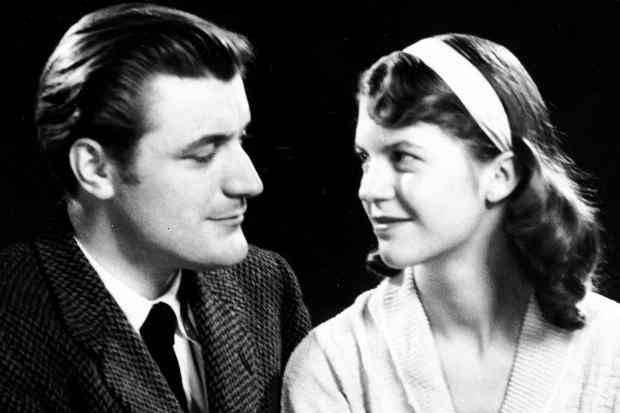
“No matter what the ideas or conduct of others, there is a unique rightness and beauty to life which can be shared in openness, in wind and sunlight, with a fellow human being who believes in the same basic principles.”
19-Year-Old Sylvia Plath on the Transcendent Simplicity and Reverence of Nature
Brain Pickings
5.05.2014
5.02.2014
4.30.2014
4.24.2014
Shallows, Daughter, If You Leave; 2013
As you look across the couch at her, you start to feel anxious. You feel bad about effectively forcing the two of you to stay in tonight, again. While you are always appreciative of your partner's efforts to take your feelings into account and help make sure you're socially comfortable, you sincerely worry that you're holding her back from enjoying a more fulfilling relationship.

The reality hits you over the next few days, and you spiral into a very deep low. You withdraw entirely and outside of work, you don't leave your apartment. You can't stop replaying the failures you made with her over and over in your head, wondering what could've been if you weren't such a fuckup. It's going to take you a long time to get over her.
4.23.2014

4.22.2014
4.21.2014
Funerales

Stop all the clocks, cut off the telephone,
Prevent the dog from barking with a juicy bone.Silence the pianos and with muffled drum
Bring out the coffin, let the mourners come.
Let aeroplanes circle moaning overhead
Scribbling on the sky the message He is Dead,
Put crépe bows round the white necks of the public doves,
Let the traffic policemen wear black cotton gloves.
He was my North, my South, my East and West,
My working week and my Sunday rest,
My noon, my midnight, my talk, my song,
I thought that love would last forever: I was wrong
The stars are not wanted now, put out every one;
Pack up the moon and dismantle the sun;
Pour away the ocean and sweep up the wood.
For nothing now can ever come to any good.
4.16.2014
4.15.2014
Two Headed Virgin
This is not the scene I dreamed of. Like much else nowadays I leave it feeling stupid, like a man who lost his way long ago but presses on along a road that may lead nowhere.
Human life must be some kind of mistake. -Schopenhauer
4.14.2014
Mag

I wish to God I never saw you, Mag.
I wish you never quit your job and came along with me.I wish we never bought a license and a white dress
For you to get married in the day we ran off to a minister
And told him we would love each other and take care of each other
Always and always long as the sun and the rain lasts anywhere.
Yes, I'm wishing now you lived somewhere away from here
And I was a bum on the bumpers a thousand miles away dead broke.
I wish the kids had never come
And rent and coal and clothes to pay for
And a grocery man calling for cash,
Every day cash for beans and prunes.
I wish to God I never saw you, Mag.
I wish to God the kids had never come.
Carl Sandburg
Acto de desvanecimiento
Apareciste con un traje espacial,
llena de electricidad,
a mitad de mi juego de solitario.
¿A donde te fuiste?
4.11.2014
4.10.2014
4.09.2014
Aniversario

"before the minute strikes 12 midnight, I wish to tell my wife that i am still so very much in love with her on this day, 6 years to the day after we married on that stage in Abilene. there is, and never will be, any creature that possesses the beauty that is you. I will be with you til the end of time. You are my everything and my all....
and hey, you bastards, put this online, or whatever the hell you do! and be quiet, the wife is trying to sleep! I never should have let you stay down here..."
M.
4.08.2014
At Last Our Promise

There is no such thing as static happiness. Happiness is a mixed thing, a thing compounded of sacrifices, and losses, and betrayals.
John Updike
4.07.2014
As the Ruin Falls

All this is flashy rhetoric about loving you.
I never had a selfless thought since I was born.
I am mercenary and self-seeking through and through:
I want God, you, all friends, merely to serve my turn.
Peace, re-assurance, pleasure, are the goals I seek,
I cannot crawl one inch outside my proper skin:
I talk of love --a scholar's parrot may talk Greek--
But, self-imprisoned, always end where I begin.
Only that now you have taught me (but how late) my lack.
I see the chasm. And everything you are was making
My heart into a bridge by which I might get back
From exile, and grow man. And now the bridge is breaking.
For this I bless you as the ruin falls. The pains
You give me are more precious than all other gains.
C. S. Lewis
4.04.2014
4.03.2014
The Beauty and Damned
“Love is bitter and all there is…
the rest is for the emotional beggars of the earth.”

On April 3, 1920 one of literary history’s most turbulent and dramatic relationships ensued — Scott was a ladies’ man since boyhood and Zelda developed an intoxicating obsession with ballet, which swept her into a downward spiral of physical and mental illness, which culminated with a breakdown in the spring of 1930. Perhaps ironically, despite spending the latter half of her life in and out of hospitals and psychiatric wards, Zelda outlived Scott, who died from a heart attack after years of heavy drinking, only to perish herself in a fire at Highland Hospital. Theirs was a love that burned with so destructive a flame that it charred both of them to the ground.
Brain Pickings
the rest is for the emotional beggars of the earth.”
On April 3, 1920 one of literary history’s most turbulent and dramatic relationships ensued — Scott was a ladies’ man since boyhood and Zelda developed an intoxicating obsession with ballet, which swept her into a downward spiral of physical and mental illness, which culminated with a breakdown in the spring of 1930. Perhaps ironically, despite spending the latter half of her life in and out of hospitals and psychiatric wards, Zelda outlived Scott, who died from a heart attack after years of heavy drinking, only to perish herself in a fire at Highland Hospital. Theirs was a love that burned with so destructive a flame that it charred both of them to the ground.
Brain Pickings
4.01.2014
3.31.2014
3.27.2014
A Good Man's Hard to Find
“The truth does not change according to our ability to stomach it.”
— Flannery O’Connor
3.21.2014
Keep Ringing Your Bells
I'm counting out dollars while I limp to your brownstone.
I can just barely cover what I need to get back home.
Cuando comenzó la guerra eran apenas unos niños, y los mejores amigos. Por razones que no entendían les prohibieron volver a verse, así que acordaron construir una baliza, como una almenara, sin embargo en lugar de estar elevada estaría escondida en lo profundo del bosque, allí donde solían ir a gritar. La escondieron justo ahí donde los limites apenas cumplían para que ambos pudieran entrar y salir con vida. El mayor viajaría en las noches hasta el recinto de piedra donde encendería un fuego que podía verse desde cierta distancia, y por la mañana el menor de ellos iría a, en caso que el fuego siguiera encendido apagarlo, lo cual casi nunca pasaba, más solo ver las cenizas aun tibias le daría la seguridad de que su mejor amigo estaba bien. Así pasaron los días, y los meses, la nieve, la lluvia, un día el bosque se prendió en llamas e incluso ese día se cumplio con el trato. La guerra duraría quince años. Solo el mayor de ellos participó en ella, y fue en su septimo año de combate que lo tomaron preso y lo torturaron, y lo volvieron ciego y lo vendieron como esclavo. Su padre y su familia lo dieron por muerto y hacían misas en su nombre. La guerra seguiría cinco años más. Hay quien dice que de no haber sido por su "muerte" que la guerra se hubiera prolongado por años, decadas quizá. Antes de partir por primera vez al campo se aseguró de dejar a un ciervo, uno de los mas jovenes, que todos los días pasara lo que pasara habría de encender la amenara por las noches, todas las noches del mundo, y que solo bajo la imposibilidad física de la muerte dejaría de hacerlo antes de que él regresara. El siervo cumplió, así todas las noches se encendía el fuego de la baliza como si se tratara de una cuestión de vida o muerte, y justo antes de morir y durante su agonizante vida al esclavo se le llenaba el corazón en este pensamiento, incapaz de regresar a su hogar, o de recuperar todo lo que había perdido ahora. Se calentaba en la idea de ese fuego quemandose, y ese fuego lo mantuvo con vida más de lo que quizá hubiera podido su cuerpo soportar. Murio viejo, ciego y solo, descansó en paz, como hacía cada noche viendo con la memoria el fuego aquel.
Por la mañana las cenizas se mezclaron con el rocío en la construcción de piedra, más nadie había visto el fuego arder, ni fue a revisar las cenizas. Eso había dejado de pasar antes incluso que la guerra terminara. El que entonces fuera niño había visto una noche que no era su mejor amigo quien encendía la baliza y sin sentir cosa alguna regresó a casa y pretendió que nada de aquello había sucedio, jamás regresó al bosque. Ahora estaba sentado, viejo, frente a una mesa repleta de comida caliente, insatisfecho. La baliza se siguió encendiendo por el hijo del siervo durante unos años más. La encendía y se sentaba frente a ella a fantasear con el motivo por el que aquel fuego debía arder, a veces se quedaba ahí hasta el amanecer. Hoy en ese mismo lugar hay un Wal Mart las luces del estacionamiento permanecen encendidas todas las noches, yo las puedo ver desde mi ventana.

3.20.2014
Hospicio, Los Cuernos, 2009
Hospice es el tercer album de estudio de la banda americana de rock The Antlers.
Hospicio cuenta la historia de una relación entre un trabajador voluntario de cierto tipo de cuidados psicologicos y médicos, que se enfoca en pacientes terminales y cuidados paliativos y una paciente sufriendo la etapa terminal de cancer de hueso, el romance que se desenvuelve, y su lento caer en espiral como resultado de los traumas, miedos y finalmente la enfermedad de ella. El lider de la banda, Peter Silberman se ha reservado de revelar detalles explicitos acerca de la naturaleza del album, y la posibilidad de que sea autobiografico.
Existe una recurrente referencia a Sylvia Plath, quien se arrancó la vida tras hundirse lentamente en la depresión y lo que algunos llamarían locura, es esa condición humana, la capacidad del dolor, desnuda nada más, esa relación de terror y añoro, amor y odio con la muerte, inevitable, los intentos de suicidio, la violencia, la humanidad. Cabe la posibilidad de que estas referencias tengan un sentido meramente artistico, sin embargo fuciona como una herramienta para considerar que el "personaje" dentro de la historia de hospicio no solo la dote de caracteristicas ficticias, sino que se sirva de referencia para la descripción de una relación que se dirige desde un principio a la muerte, de una manera consciente y dolorosa.
1. Prologue
Un constante huracan, un remolino, un ir y volver envuelven todo el album de una manera continua, a veces esperanzadora, a veces sumida en el fondo de lo más oscuro, sin dios. El prologo al album contiene la esencia de ese subir y bajar acompañada por un piano que esta cayendo por un precipicio y no se detendrá hasta que haya alcanzado el infierno. En ese caer constante y endiablado, ciertas cuerdas, vocales quizá, sucias, en el fondo, perdidas, se elevan en contraste. Hasta que no queda ni piano ni voces solo el constante repetirse del huracan.
2. Kettering
I wish that I had known in that first minute we met,
the unpayable debt that I owed you.
'Cause you'd been abused by that bone that refused you,
and you hired me to make up for that.
El titulo hace referencia al Memorial Sloan Kettering Center un centro de cuidados especializado en cancer, en Nueva York y encierra en sus cinco minutos el comienzo del final, que es el comienzo y la catastrofe que se desata la primera vez que se cruza la vida, en el inveitable caminar hacia la muerte. El huracan calma sus aguas y desaparece suavemente al escuchar los pianos marchando, acercandose, cuando la ve por primera vez. El mundo parece entrar en calma. Hubiera querido saber desde el primer momento que nos conocimos la impagable deuda que tendría contigo. Caen los versos, todo esta temblando como la primera vez que te enfrentas a la muerte o al amor, que parecen lo mismo. Encierra al mismo tiempo una nostalgía que trae el recuerdo de algo que no va a regresar, y al mismo tiempo, la melancolía de añorar algo que no se ha tendio y con la consciencia de que no se va a tener.
You said you hated my tone, it made you feel so alone,
and so you told me I ought to be leaving.
Incluso cuando el rechazo tiene esa determinación, porque ¿que sentido tiene ya la existencia?, porque se debe detestar todo, porque es imposible que exista en el mundo dos personas que compartan de manera física el dolor del otro, porque las circunstancias de un ser humano son irrepetibles como su DNA, y esta idea de la incapacidad, la impotencia de detener lo inevitable, la fragilidad ante el curso natural del cosmos, de darse cuenta que no es una ficción, que el mundo y la vida, incluso la vida misma es tan fragil y tan fuera de control, del control de uno mismo, que es imposible contenterse de sentir repulsión ante todo, incluso ante quienes solo quieren ayudar. El piano sigue tocando, el tremolo que anuncia el huracan se suma, se acerca hasta que tras recitar los ultimos versos, cuando la realización tiene que ver con darse cuenta y con abrazar la realidad, se rompe en ruido.
But something kept me standing by that hospital bed,
I should have quit but instead I took care of you.
You made me sleep all uneven, and I didn't believe them
when they told me that there was no saving
you.
3. Sylvia
Sorry. I don't know what I said,
but you're crying now again,
and that only makes it worse.
Let me do my job.
Como en un susurro con el tambor golpeandose como el pecho de un pecador, antes de que las guitarras y el torbellino de ruidos comienze a caer todo de un solo golpe, antes que todo, una suplica, de hacer las cosas bien, de que le dejen hacer las cosas bien, de perdón, de arrepentimiento, sobre todo por no saber en donde exactamente ha fallado, pero la ha visto llorar y ahora lo unico que queda es recuperar la poca paz que pudiera proporcionar. Pero la suplica no es suficiente, y la despesperación es demasiada, así que estalla todo otra vez tras el primer verso.
Sylvia, get your head out of the oven.
Go back to screaming,
and cursing,
remind me again how everyone betrayed you.
A la edad de 30 años encontraron a Silvya Plath muerta con la cabeza en el horno y el gas a todo lo que daba, habiendo sellado la cocina con toalllas en las puertas que la separaban de los niños, se había arrancado la vida. Plath y Hughes habían estado separados por cinco meses hasta ese día. Seguirían separados por lo que quedaba.
Dejame tomar tu temperatura, puedes aventarme el termometro si es es lo que quieres hacer ¿esta bien? Por favor ten calma. Si a pesar de la imposibilidad de poder percibir por completo la situación de otro ser humano existe siempre la capacidad de comprensión, una comprensión que no tiene que ver con el entendimiento, sino con algo más parecido a la caridad, caridad no como limosna, sino como fraternidad, como amor, como cariño. Dejame hacer mi trabajo. Pero todo ha explotado ya y todo es un caos, suenan las trompetas, vuelan los termometros, o peor aun dejan de volar. Plath había descrito su desesperación como "las garras de un búho clavandose en el corazón".
Can't you see I'm scared to speak,
and I hate my voice
'cause it only makes you angry.
but you're crying now again,
and that only makes it worse.
Let me do my job.
Como en un susurro con el tambor golpeandose como el pecho de un pecador, antes de que las guitarras y el torbellino de ruidos comienze a caer todo de un solo golpe, antes que todo, una suplica, de hacer las cosas bien, de que le dejen hacer las cosas bien, de perdón, de arrepentimiento, sobre todo por no saber en donde exactamente ha fallado, pero la ha visto llorar y ahora lo unico que queda es recuperar la poca paz que pudiera proporcionar. Pero la suplica no es suficiente, y la despesperación es demasiada, así que estalla todo otra vez tras el primer verso.
Sylvia, get your head out of the oven.
Go back to screaming,
and cursing,
remind me again how everyone betrayed you.
A la edad de 30 años encontraron a Silvya Plath muerta con la cabeza en el horno y el gas a todo lo que daba, habiendo sellado la cocina con toalllas en las puertas que la separaban de los niños, se había arrancado la vida. Plath y Hughes habían estado separados por cinco meses hasta ese día. Seguirían separados por lo que quedaba.
Dejame tomar tu temperatura, puedes aventarme el termometro si es es lo que quieres hacer ¿esta bien? Por favor ten calma. Si a pesar de la imposibilidad de poder percibir por completo la situación de otro ser humano existe siempre la capacidad de comprensión, una comprensión que no tiene que ver con el entendimiento, sino con algo más parecido a la caridad, caridad no como limosna, sino como fraternidad, como amor, como cariño. Dejame hacer mi trabajo. Pero todo ha explotado ya y todo es un caos, suenan las trompetas, vuelan los termometros, o peor aun dejan de volar. Plath había descrito su desesperación como "las garras de un búho clavandose en el corazón".
Can't you see I'm scared to speak,
and I hate my voice
'cause it only makes you angry.
4. Atrophy
In your dreams I'm a criminal, horrible, sleeping around
While you're awake I'm impossible, constantly letting you down.
El tremolino persigue los versos y en una atmosfera de tranquilidad, las palabras de sumisión voluntaria, de entrega, la única manera válida de posesión, se arrastran en oraciones de obediencia, del olvido del yo, con la tranquilidad de quien vive fuera de si, lejos de sí mismo, entregado a vivir en esa cama de enfermo, obedeciendo ordenes, repitiendo discursos, siguiendo reglas, consciente que el infierno que se desata cuando esta despierta no es culpa de ella, pues es solo el reflejo del infierno que lleva dentro, que no es su culpa tampoco. De esa imagen que ella no puede evitar tener de él, un criminal cuando dormida, un cobarde cuando despierta.
En el segundo verso habla de figuras de porcelana, pequeñas balas de vidrio que dispara a los muros, amenazas de castración, el anillo en el dedo mordido y se ofrece como sacrificio a recibir esas balas dentro de ella para ponerlas en su interior. Y por primera vez desde que comienza el album, la canción no explota en una avalancha de violencia, sino se hunde en el tremolo que se intensifica y se agudiza, se vuelve cristalino y por un momento un zumbido, hasta que el zumbido se convierte en porcelana rompiendose en mil pedazos, astillas de huesos, un helicoptero, campanas, balas de cristal, mas huesos, mas porcelana, silencio, guitarra.
Someone, oh anyone, tell me how to stop this
She's screaming, expiring, and I'm her only witness
La canción va a alcanzar casi los ocho minutos, más es dificil apenas percibirlos. Esta infectado, él se ha vuelto ella, quiere su enfermedad, quiere abrazarla, su violencia, se ha entregado, él ya no es él, no se encuentra como individuo, esta enfermo como ella, porque así lo ha decidido.
I'm freezing, infected, and rigid in that room inside her
No one's going to come as long as I lay still in bed beside her.
5. Bear
Drink champagne although you shouldn't be
We'll be blind and dumb until we fall asleep
Oso es el primer sencillo del disco y la canción que más alcance tuvo. Resulta natural dado que es el track mas upbeat, a diferencia del resto del album, esta compuesta no solo en tempo y ritmo, sino que la composición es en definitiva mas contemporanea y alegre. La letra sugiere el embarazo y mientras la base de los versos es lo que parece un piano de juguete marcando un circulo de cuatro notas, sugiere sobre todo la idea de un aborto. Sería injusto señalar tan llanamente el track por lo deliberado que habla de un tema que ridiculamente hoy sigue causando controversia, así nada más sin considerar que todo dentro de este album, autobiográfico o no, todo esta cuidadosamente colocado. Tirar justo en medio de la historia una canción de aborto, por el aborto, resulta poco sensato. Una de las consideraciónes es que aún cuando evidentemente la canción habla de los personajes recurriendo al aborto, este puede tener sus causas en los tratamientos medicos contra el cancer, es decir, forzado, natural, hermoso y terrible, como todo, la existencia y la inexistencia se miran a los ojos como amantes.
We're terrified of one another
And terrified of what that means
Más, incluso considerando esto hay quien considera que no sea sino otra alegoría por parte de Peter Silberman para representar la muerte de algo que vivía dentro de ella, pues un aborto no deja de ser eso al final. Así pues el aborto puede significar la muerte de algo que vivía dentro de ella hasta entonces, las ganas de seguir luchando contra la depresión y de sentirse mejor, de existir siquiera, o como sugieren otros, la muerte de aquello que le hizo a él enamorarse de ella en un principio. Al final, nadie sabemos lo que estamos haciendo y la canción se termina, y te dan ganas de bailar.
And all the while I'll know we're fucked
And not getting unfucked soon.
We're too old
We're not old, old at all
Just too old
We're not old, old at all
6. Thirteen
En 1953 tras varios tratamientos de electroshocks para bipolaridad y depresión Sylvia Plath intentó quitarse la vida tomando una sobredosis de pildoras para dormir de su madre arrastrandose hasta quedar debajo de su casa donde la encontrarón tres días despues, algo a que despues describiría como "felizmente sucumbir a la oscuridad dando vueltas en lo que sinceramente creyó era el eterno olvido". Se escucha una voz femenina, esta vez no es Peter cantando, tras dos minutos de ruido, de oscuridad, del eterno olvido.
Pull me out
Pull me out
Can't you stop this all from happening?
Close the doors and keep them out.
Silberman.
Dig me out
Oh, dig me out
Couldn't you have kept all this from happening?
Dig me out from under our house.
7. Two
But I hid out in the hall until the hurricane blew
When I reappeared and tried to give you something for the pain
You came to hating me again
En este track se sugiere una cantidad de cosas que parece surreal la manera tan natural en la que los contiene. Existe otra referencia para comenzar a la bipolaridad de la que sufría Sylvia Plath, el titulo y la letra continuamente haciendo referencia a esto "There's two people living in one small room, from your two half-families tearing at you" al mismo tiempo, que esto puede resultar una vez más tomado como una referencia alegorica a lo que es la historia en particular, que es la violencia y los arranques por parte de ella, a los que llama huracanes, y aunque el mood en el que esta planteado lo canción no sugiere la violencia de los primeros tracks en el disco, esta vez esta encerrada completamente en la lirica, que es explícita.
Tell me when you think that we became so unhappy
Wearing silver rings with nobody clapping
When we moved here together we were so disappointed
Sleeping out of tune with our dreams disjointed
It killed me to see you getting always rejected
But I didn't mind the things you threw, the phones I deflected
I didn't mind you blaming me for your mistakes
I just held you in the door-frame through all of the earthquakes
Aún aqui quedan referencias a las descargas electricas de las que fue victima como "cura" "Then they stuck you in machines, you came so close to dying, they should have listened, they thought that you were lying" resultado de la bipolaridad, a los problemas dentro de la familia "daddy fucked you up" y más importante esta esa intención del narrador de mostrarse como uno de esos dos que vive en su cabeza, no esta ella sola, le propone, no serás mas tu contra tí, sino que yo me volveré uno de ellos, me volvere tu, para vivir dentro de ti, y comienza a hablar de uno de los dos como si fuera él, ahora solo quedan ellos dos, la invita, a que lo deje vivir dentro de su cabeza, en esa habitación donde todo es un torbellino, antes de que los torbellinos salgan de ahí. Sugiere que él se echará la culpa, ya lo ha hecho, ahora son uno, y viven en la misma pequeña habitación, porque no es culpa de ella tampoco, no hay testigos, son solo ellos dos y los huracanes.
But you packed up your clothes in that bag every night
And I would try to grab your ankles (what a pitiful sight)
But after over a year, I stopped trying to stop you
From stomping out that door
Coming back like you always do
Well no one's going to fix it for us,
no one can
You say that, "No one's going to listen, and no one understands"
Cuarenta segundos de ecos de voces.
8. Shiva
Shiva es un periodo de luto judío de siete días. Despues de que alguien muere, el doliente debe asistir a la casa del difunto, en este caso el hospital, y permanecer en el suelo o en taburetes cortos durante una semana.
Suddenly every machine stopped at once
And the monitors beeped the last time.
Hundreds of thousands of hospital beds
And all of them empty but mine.
Él se ha convertido en ella. Se le rompen los huesos. Se echa a reir.
9. Wake
Now that everyone's an enemy, my heart sinks
Let's put away those claws
La lirica de la canción se divide en dos, la primera parte esta escrita a una tercera persona, la canción sugiere un conocido o amigo del narrador, la busqueda de cobijo ante la ahora evidente ausencia de ella, todo lo que había desaparecido cuando ella apareció se eleva de pronto, edificios, parques, otros seres humanos que parecían haber sido arrastrados con el huracan, o era que quizá era él quien había sido arrastrado por el huracan y alejado de todo lo que creyó haber conocido hasta antes de ella. Como haya sido se encuentra ahora de regreso ante la posibilidad de la otredad. Solo.
Is never to repent for someone else
It's letting people in.
La segunda parte de la canción esta escrita y compuesta en el mismo tono que Atrophy, literalmente la canción repite la misma secuencia de acordes que cuando dice "Someone, oh anyone, tell me how to stop this" y esta segunda parte esta hablandole de nuevo a ella, o hablando solo, que es ahora lo mismo, renegando, obstinado en no dejarla ir, necio, en no perderla para siempre, aún cuando eso ya no depende de él, no pudo ayudarlo más, ahora le queda solo eso, él es ahora el huracan, el torbellino, el ruido de las maquinas de hospital, la caida, el zumbido, los golpes de pecho, el corazón, se lo han arrancado todo.
Don't be scared to speak
Don't speak with someone's tooth
Don't bargain when you're weak
Don't take that sharp abuse
Some patients can't be saved
But that burden's not on you
Don't ever let anyone tell you you deserve that
10. Epilogue
And like before, you've got no interest in the life you live when you're awake
Your dreams still follow storylines, like fictions you would make
Escrita en el mismo tono que "two" con la misma secuencia de acordes, Epilogo cierra el album con la fuerza que ha conservado caa track, lirica y musicalmente. Esta es quizá la canción mas reveladora, más intima, intentar intepretarla resulta ridiculo, es agotador escucharla siquiera, tiene la continuidad de todo el album y apenas se ha terminado hace volver al prologo inmediatamente, la voz de Silberman se desenvuelve con una naturalidad que resulta dolorosa.
I've woken up, I'm in our bed, but there's no breathing body there beside me
Someone must have taken you while I was stuck asleep
But I know better as my eyes adjust
You've been gone for quite a while now
Cuando la ansiedad, se intensifica, cuando eso que parece locura esta ahogando las bocinas, parece que ha de regresar el huracan, y que todo va a estallar de nuevo, mas el huracan se ido y solo queda un piano, y todo lo que tenía sentido lo ha perdido para siempre, todo lo que había para entregarse por él no existe, solo queda el abandono y la doloroso del recuerdo, al que se aferra, como a la cama vacía ahora, le ha invadido eso que la gente llama locura, lo han tenido que dejar ir por esta razón, más ella regresa en ocasiones, de noche, justo cuando él cree haber alcanzado el sueño, su cara esta contra la de ella, yuna vez más esta demasiado aterrado de decir cualquier cosa y odia su voz.
You're screaming
And cursing
And angry
And hurting me
And then smiling
And crying
Apologizing
And not getting unfucked soon.
We're too old
We're not old, old at all
Just too old
We're not old, old at all
6. Thirteen
En 1953 tras varios tratamientos de electroshocks para bipolaridad y depresión Sylvia Plath intentó quitarse la vida tomando una sobredosis de pildoras para dormir de su madre arrastrandose hasta quedar debajo de su casa donde la encontrarón tres días despues, algo a que despues describiría como "felizmente sucumbir a la oscuridad dando vueltas en lo que sinceramente creyó era el eterno olvido". Se escucha una voz femenina, esta vez no es Peter cantando, tras dos minutos de ruido, de oscuridad, del eterno olvido.
Pull me out
Pull me out
Can't you stop this all from happening?
Close the doors and keep them out.
Silberman.
Dig me out
Oh, dig me out
Couldn't you have kept all this from happening?
Dig me out from under our house.
7. Two
But I hid out in the hall until the hurricane blew
When I reappeared and tried to give you something for the pain
You came to hating me again
En este track se sugiere una cantidad de cosas que parece surreal la manera tan natural en la que los contiene. Existe otra referencia para comenzar a la bipolaridad de la que sufría Sylvia Plath, el titulo y la letra continuamente haciendo referencia a esto "There's two people living in one small room, from your two half-families tearing at you" al mismo tiempo, que esto puede resultar una vez más tomado como una referencia alegorica a lo que es la historia en particular, que es la violencia y los arranques por parte de ella, a los que llama huracanes, y aunque el mood en el que esta planteado lo canción no sugiere la violencia de los primeros tracks en el disco, esta vez esta encerrada completamente en la lirica, que es explícita.
Tell me when you think that we became so unhappy
Wearing silver rings with nobody clapping
When we moved here together we were so disappointed
Sleeping out of tune with our dreams disjointed
It killed me to see you getting always rejected
But I didn't mind the things you threw, the phones I deflected
I didn't mind you blaming me for your mistakes
I just held you in the door-frame through all of the earthquakes
Aún aqui quedan referencias a las descargas electricas de las que fue victima como "cura" "Then they stuck you in machines, you came so close to dying, they should have listened, they thought that you were lying" resultado de la bipolaridad, a los problemas dentro de la familia "daddy fucked you up" y más importante esta esa intención del narrador de mostrarse como uno de esos dos que vive en su cabeza, no esta ella sola, le propone, no serás mas tu contra tí, sino que yo me volveré uno de ellos, me volvere tu, para vivir dentro de ti, y comienza a hablar de uno de los dos como si fuera él, ahora solo quedan ellos dos, la invita, a que lo deje vivir dentro de su cabeza, en esa habitación donde todo es un torbellino, antes de que los torbellinos salgan de ahí. Sugiere que él se echará la culpa, ya lo ha hecho, ahora son uno, y viven en la misma pequeña habitación, porque no es culpa de ella tampoco, no hay testigos, son solo ellos dos y los huracanes.
But you packed up your clothes in that bag every night
And I would try to grab your ankles (what a pitiful sight)
But after over a year, I stopped trying to stop you
From stomping out that door
Coming back like you always do
Well no one's going to fix it for us,
no one can
You say that, "No one's going to listen, and no one understands"
Cuarenta segundos de ecos de voces.
8. Shiva
Shiva es un periodo de luto judío de siete días. Despues de que alguien muere, el doliente debe asistir a la casa del difunto, en este caso el hospital, y permanecer en el suelo o en taburetes cortos durante una semana.
Suddenly every machine stopped at once
And the monitors beeped the last time.
Hundreds of thousands of hospital beds
And all of them empty but mine.
Él se ha convertido en ella. Se le rompen los huesos. Se echa a reir.
9. Wake
Now that everyone's an enemy, my heart sinks
Let's put away those claws
La lirica de la canción se divide en dos, la primera parte esta escrita a una tercera persona, la canción sugiere un conocido o amigo del narrador, la busqueda de cobijo ante la ahora evidente ausencia de ella, todo lo que había desaparecido cuando ella apareció se eleva de pronto, edificios, parques, otros seres humanos que parecían haber sido arrastrados con el huracan, o era que quizá era él quien había sido arrastrado por el huracan y alejado de todo lo que creyó haber conocido hasta antes de ella. Como haya sido se encuentra ahora de regreso ante la posibilidad de la otredad. Solo.
Is never to repent for someone else
It's letting people in.
La segunda parte de la canción esta escrita y compuesta en el mismo tono que Atrophy, literalmente la canción repite la misma secuencia de acordes que cuando dice "Someone, oh anyone, tell me how to stop this" y esta segunda parte esta hablandole de nuevo a ella, o hablando solo, que es ahora lo mismo, renegando, obstinado en no dejarla ir, necio, en no perderla para siempre, aún cuando eso ya no depende de él, no pudo ayudarlo más, ahora le queda solo eso, él es ahora el huracan, el torbellino, el ruido de las maquinas de hospital, la caida, el zumbido, los golpes de pecho, el corazón, se lo han arrancado todo.
Don't be scared to speak
Don't speak with someone's tooth
Don't bargain when you're weak
Don't take that sharp abuse
Some patients can't be saved
But that burden's not on you
Don't ever let anyone tell you you deserve that
10. Epilogue
And like before, you've got no interest in the life you live when you're awake
Your dreams still follow storylines, like fictions you would make
Escrita en el mismo tono que "two" con la misma secuencia de acordes, Epilogo cierra el album con la fuerza que ha conservado caa track, lirica y musicalmente. Esta es quizá la canción mas reveladora, más intima, intentar intepretarla resulta ridiculo, es agotador escucharla siquiera, tiene la continuidad de todo el album y apenas se ha terminado hace volver al prologo inmediatamente, la voz de Silberman se desenvuelve con una naturalidad que resulta dolorosa.
I've woken up, I'm in our bed, but there's no breathing body there beside me
Someone must have taken you while I was stuck asleep
But I know better as my eyes adjust
You've been gone for quite a while now
Cuando la ansiedad, se intensifica, cuando eso que parece locura esta ahogando las bocinas, parece que ha de regresar el huracan, y que todo va a estallar de nuevo, mas el huracan se ido y solo queda un piano, y todo lo que tenía sentido lo ha perdido para siempre, todo lo que había para entregarse por él no existe, solo queda el abandono y la doloroso del recuerdo, al que se aferra, como a la cama vacía ahora, le ha invadido eso que la gente llama locura, lo han tenido que dejar ir por esta razón, más ella regresa en ocasiones, de noche, justo cuando él cree haber alcanzado el sueño, su cara esta contra la de ella, yuna vez más esta demasiado aterrado de decir cualquier cosa y odia su voz.
You're screaming
And cursing
And angry
And hurting me
And then smiling
And crying
Apologizing
3.18.2014
3.17.2014

3.16.2014
When your lonely heart has learned it's lesson
Las aves se acercan por fin a la casa, bajan hasta el balcón pero es solo para pellizcar la carne muerta que descansa sobre el charco de sangre, pudriendose.
3.12.2014
Making Pancakes

Rocks dont see it.
Bless and sit down.
Forgive and forget.
Practice kindness all day to everybody
and you will realize you’re already
in heaven now.
That’s the story.
That’s the message.
Nobody understands it,
nobody listens, they’re
all running around like chickens with heads cut
off. I will try to teach it but it will
be in vain, s’why I’ll
end up in a shack
praying and being
cool and singing
by my woodstove
making pancakes.
// Happy Birthday Jack //
and you will realize you’re already
in heaven now.
Shrink Dust, Weight Sin Ave.

Me puse de pie y caminé a la salida. Fui interrumpido por los brazos delgados de una señorita. Llevaba unas brazos delgados y blancos, los ojos grandes, grises, azules, el cabello rubio, los huesos de su cara parecían perfectos, era lata y delgada y parecía haber pasado toda la noche en una fiesta. Me tomó del brazo izquierdo, ¿Tienes una moneda que me puedas dar antes que vayas a prisión? Miré el puño de acomodados billetes que llevaba aún en las manos, la miré a los ojos, tenía violeta los párpados, las sombras. No, dijo, una moneda, solo una moneda y te puedo mostrar algo para que recuerdes mientras pasas tu tiempo en la carcel- se desabotonó el pantalón y comenzó a estirar sus bragas hacia abajo. Me busque en el bolsillo donde las había sentido antes. Cuando por fin se bajó las bragas y el pantalón por debajo de la pelvis me mostró un par de testiculos, no había un pene o un solo pelo púbico ahí, no había tampoco una vagina, era solo un pubis liso y unos testiculos colgando al final. Saqué las dos monedas que encontré, se las dí. Se subió el pantalón y lo abotonó mientras me sonreía.
El gerente regresó con un tipo mucho mas viejo que él, delgado, alto, con unas gafas gruesas, estaba casi completamente pelón, parecía un esqueleto embarrado de pellejo. Me tomo del cuello. Y me encaminó hasta donde había sentado antes. El gerente y otros cuatro tipos se sentaron con nosotros. -Te voy a mostrar una pelicula, me dijo y desde un aparato que parecía una maquina de tortura para filmes salió la luz de algo que se suponía debía proyectarse en algún lado. La luz parecía, ciertamente, torturada. Se me escapó un largo suspiro sin darme cuenta. Otra patrulla de policía cruzó la avenida allá afuera, la pude ver por el ventanal junto al ATM, sentada con la mirada fija sobre mi, la vieja abuela no se movía o parpadeaba. Busqué un reloj. Debían ser las 5:00. Parecían las 7:00 Eran las 6:18
3.11.2014
Light me Up Twice

Un día de estos, pensó, hare algo de dinero. De dinero de verdad. Para comprar un asiento de bicicleta nuevo, para poder ir de ida y regerso a su casa cada noche.
Dios aún no entiende
Nos mira con tristeza, cómo me mira a mi tratando de no olvidar. Pero no es que yo sea una especie de algo importante, todo lo contrario. Lo contrario a todo lo importante cuya palabra no conozco si quiera.. Quiero decir, si, vaya que la sé. Lo que no se es lo que pueda tener que significar de manera tan absurda.
Somos una gran bola de monos, la peor. Tanto que no me atrevo a escribirlo.
Él estaba enamorado de la mujer que aparecía en los videos informativos de la empresa, la vio por primera vez en un avión. Por alguna razón terminó viendo caricaturas para niños, algo como Tom y Jerry donde al final ambos mueren.
Dios esta en todos lados. Bajo la falda de una mujer. Bajo los pantalones de un hombre.
Tu Dios se siente tan bien.
3.10.2014
Euphoria
YOU TAKE ANY TRAIN
MEET ME DOWNTOWN FOR A FEW EVERY STREET CARRIES US HOME
BORN BUSY AS A BROOKLYN BOUND B I AM MADE TO LEAVE
I AM MADE TO RETURN
HOME
ONWARD UPWARD
I WAS NURTURED HERE I COP FUTURES HERE
LIFE IS A FIGHT FOR LIFE AIDAN SEEGER IS HERE
FROM NINETY-NINE TO NINETY-NINE AND FROM NINE TO NINE
WE COULD SHARE NINETY-NINE STARES ENDURE NINETY-NINE CARES
SAY NINETY-NINE SWEARS
AND BE FINE NINETY-NINE PERCENT OF THE TIME
I AM NINETY-NINE PERCENT SURE THIS LOVE WE SHARE IS 99.9999999999999999999% PURE
I GREW UP IN YOUR ARMS, RAISED TO TAKE FLIGHTS OWNING THE GROUND I HELD STEEPED IN YOUR STORIES
I AM UP WAITING FOR YOU
DOLLAR HERE DOLLAR THERE
HUNDRED HUSTLERS HUSTLE FOR HUNDREDS
SLEEPLESS ENTREPRENEUR TURNS A BUCK INTO FOUR
BARKERS CALL ME TO SHOP AT STORES SOME ARE SELLING ROCKETS
SOME ARE CHECKING POCKETS
SOME ARE ON THE DOCKET
I WALK UP THE BLOCK, MONEY IN SOCK PAST PITFALLS THAT FACE ME
TO BUY CLOTHES AT MACY’S
Dave at The End of Sixth Grade c. 1980
TURN TO ME
I SEE ETERNITY
EUPHORIA
IS YOU FOR ME
Steve Powers

MEET ME DOWNTOWN FOR A FEW EVERY STREET CARRIES US HOME
BORN BUSY AS A BROOKLYN BOUND B I AM MADE TO LEAVE
I AM MADE TO RETURN
HOME
ONWARD UPWARD
I WAS NURTURED HERE I COP FUTURES HERE
LIFE IS A FIGHT FOR LIFE AIDAN SEEGER IS HERE
FROM NINETY-NINE TO NINETY-NINE AND FROM NINE TO NINE
WE COULD SHARE NINETY-NINE STARES ENDURE NINETY-NINE CARES
SAY NINETY-NINE SWEARS
AND BE FINE NINETY-NINE PERCENT OF THE TIME
I AM NINETY-NINE PERCENT SURE THIS LOVE WE SHARE IS 99.9999999999999999999% PURE
I GREW UP IN YOUR ARMS, RAISED TO TAKE FLIGHTS OWNING THE GROUND I HELD STEEPED IN YOUR STORIES
I AM UP WAITING FOR YOU
DOLLAR HERE DOLLAR THERE
HUNDRED HUSTLERS HUSTLE FOR HUNDREDS
SLEEPLESS ENTREPRENEUR TURNS A BUCK INTO FOUR
BARKERS CALL ME TO SHOP AT STORES SOME ARE SELLING ROCKETS
SOME ARE CHECKING POCKETS
SOME ARE ON THE DOCKET
I WALK UP THE BLOCK, MONEY IN SOCK PAST PITFALLS THAT FACE ME
TO BUY CLOTHES AT MACY’S
Dave at The End of Sixth Grade c. 1980
TURN TO ME
I SEE ETERNITY
EUPHORIA
IS YOU FOR ME
Steve Powers
3.09.2014
Broken Dreams Club

"He took pains to avoid self-depreciation, self-mockery, ambiguity, irony, subtlety, vulnerability, a civilized world-weariness and a tragic sense of history—the very things, he says, that are most natural to him."
Don Delillo
3.07.2014
3.06.2014
Love Away
It is a curious thought, but it is only when you see people looking ridiculous that you realize just how much you love them.
Agatha Christie
Dépaysement

I've never been lonely. I've been in a room -- I've felt suicidal. I've been depressed. I've felt awful -- awful beyond all -- but I never felt that one other person could enter that room and cure what was bothering me...or that any number of people could enter that room. In other words, loneliness is something I've never been bothered with because I've always had this terrible itch for solitude. It's being at a party, or at a stadium full of people cheering for something, that I might feel loneliness. I'll quote Ibsen, "The strongest men are the most alone." I've never thought, "Well, some beautiful blonde will come in here and give me a fuck-job, rub my balls, and I'll feel good." No, that won't help. You know the typical crowd, "Wow, it's Friday night, what are you going to do? Just sit there?" Well, yeah. Because there's nothing out there. It's stupidity. Stupid people mingling with stupid people. Let them stupidify themselves. I've never been bothered with the need to rush out into the night. I hid in bars, because I didn't want to hide in factories. That's all. Sorry for all the millions, but I've never been lonely. I like myself. I'm the best form of entertainment I have. Let's drink more wine!
3.04.2014

3.03.2014
Femina
My stomach is the most violent of all of Italy,
it's a map where you can read all my pain,
fears
and bullshit.

If I was going to kill myself today,
would you watch me on TV tomorrow anyway?
2.28.2014

2.25.2014
2.24.2014
Green Blood

I’m like dynamite. Need a cheerleader. Let me throw you down while I look at her.
I’m like, “Oh my god, I think I need a girlfriend"
Fuck all you bad boys


2.19.2014

2.05.2014

Suscribirse a:
Entradas (Atom)