Hope is the result of confusing the desire that something should take place with the probability that it will. Perhaps no man is free from this folly of the heart, which deranges the intellect’s correct appreciation of probability to such an extent that, if the chances are a thousand to one against it, yet the event is thought a likely one. Still in spite of this, a sudden misfortune is like a death stroke, whilst a hope that is always disappointed and still never dies, is like death by prolonged torture.
He who has lost all hope has also lost all fear; this is the meaning of the expression “desperate.” It is natural to a man to believe what he wishes to be true, and to believe it because he wishes it, If this characteristic of our nature, at once beneficial and assuaging, is rooted out by many hard blows of fate, and a man comes, conversely, to a condition in which he believes a thing must happen because he does not wish it, and what he wishes to happen can never be, just because he wishes it, this is in reality the state described as “desperation.”
Schopenhauer
7.17.2014

7.16.2014
LCD

Me gusta mirar mi computadora hacía arriba,
como en un pedestal,
me gusta mirar el monitor con el cuello doblado,
como a un dios,
o una obra de arte,
me gusta que se imponga ante mi,
también me gusta ver insectos agonizando al filo de la tortilla de mi taco,
con la cabeza gacha,
justo en la orilla,
carne, insecto y maíz,
no muertos,
pero agonizando.
Padre Muerto

Patricide:
Patricide is a bad idea, first because it is contrary to law and custom and second because it proves, beyond a doubt, that the father’s every fluted accusation against you was correct: you are a thoroughly bad individual, a patricide! — member of a class of persons universally ill-regarded. It is all right to feel this hot emotion, but not to act upon it. And it is not necessary. It is not necessary to slay your father, time will slay him, that is a virtual certainty. Your true task lies elsewhere. Your true task, as a son, is to reproduce every one of the enormities touched upon in this manual, but in attenuated form. You must become your father, but a paler, weaker version of him. The enormities go with the job, but close study will allow you to perform the job less well than it has previously been done, thus moving toward a golden age of decency, quiet, and calmed fevers. Your contribution will not be a small one, but “small” is one of the concepts that you should shoot for. If your father was a captain in Battery D, then content yourself with a corporalship in the same battery. Do not attend the annual reunions. Do not drink beer or sing songs at the reunions. Begin by whispering, in front of a mirror, for thirty minutes a day. Then tie your hands behind your back for thirty minutes a day, or get someone else to do this for you. Then, choose one of your most deeply held beliefs, such as the belief that your honors and awards have something to do with you, and abjure it. Friends will help you abjure it, and can be telephoned if you begin to backslide. You see the pattern, put it into practice. Fatherhood can be, if not conquered, at least “turned down” in this generation — by the combined efforts of all of us together.
Donald Barthelme // The Dead Father.
7.15.2014
Suficiente
There are always meaningful songs for somebody. People are doing their courting, people are finding their wives, people are making babies, people are washing their dishes, people are getting through the day, with songs that we may find insignificant. But their significance is affirmed by others. There’s always someone affirming the significance of a song by taking a woman into his arms or by getting through the night. That’s what dignifies the song. Songs don’t dignify human activity. Human activity dignifies the song.
It [has] to do with two things. One is economic urgency. I just never made enough money to say, “Oh, man, I think I’m gonna get a yacht now and scuba-dive.” I never had those kinds of funds available to me to make radical decisions about what I might do in life. Besides that, I was trained in what later became known as the Montreal School of Poetry. Before there were prizes, before there were grants, before there were even girls who cared about what I did. We would meet, a loosely defined group of people. There were no prizes, as I said, no rewards other than the work itself. We would read each other poems. We were passionately involved with poems and our lives were involved with this occupation…
We had in our minds the examples of poets who continued to work their whole lives. There was never any sense of a raid on the marketplace, that you should come up with a hit and get out. That kind of sensibility simply did not take root in my mind until very recently…
So I always had the sense of being in this for keeps, if your health lasts you. And you’re fortunate enough to have the days at your disposal so you can keep on doing this. I never had the sense that there was an end. That there was a retirement or that there was a jackpot.

If I knew where the good songs came from, I’d go there more often. It’s a mysterious condition. It’s much like the life of a Catholic nun. You’re married to a mystery.
BrainPickings
It [has] to do with two things. One is economic urgency. I just never made enough money to say, “Oh, man, I think I’m gonna get a yacht now and scuba-dive.” I never had those kinds of funds available to me to make radical decisions about what I might do in life. Besides that, I was trained in what later became known as the Montreal School of Poetry. Before there were prizes, before there were grants, before there were even girls who cared about what I did. We would meet, a loosely defined group of people. There were no prizes, as I said, no rewards other than the work itself. We would read each other poems. We were passionately involved with poems and our lives were involved with this occupation…
We had in our minds the examples of poets who continued to work their whole lives. There was never any sense of a raid on the marketplace, that you should come up with a hit and get out. That kind of sensibility simply did not take root in my mind until very recently…
So I always had the sense of being in this for keeps, if your health lasts you. And you’re fortunate enough to have the days at your disposal so you can keep on doing this. I never had the sense that there was an end. That there was a retirement or that there was a jackpot.
If I knew where the good songs came from, I’d go there more often. It’s a mysterious condition. It’s much like the life of a Catholic nun. You’re married to a mystery.
BrainPickings
7.14.2014
Venenos Lentos

7.11.2014
Complaint

Alasdair Gray
7.10.2014
Laugh

Laugh, and the world laughs with you;
Weep, and you weep alone.
For the sad old earth must borrow it's mirth,
But has trouble enough of its own.
Sing, and the hills will answer;
Sigh, it is lost on the air.
The echoes bound to a joyful sound,
But shrink from voicing care.
Rejoice, and men will seek you;
Grieve, and they turn and go.
They want full measure of all your pleasure,
But they do not need your woe.
Be glad, and your friends are many;
Be sad, and you lose them all.
There are none to decline your nectared wine,
But alone you must drink life's gall.
Feast, and your halls are crowded;
Fast, and the world goes by.
Succeed and give, and it helps you live,
But no man can help you die.
There is room in the halls of pleasure
For a long and lordly train,
But one by one we must all file on
Through the narrow aisles of pain.

7.09.2014
Lanark
A story can always end happily by stopping at a cheerful moment. Of course in nature the only end is death, but death hardly ever happens when people are at their best. That is why we like tragedies. They show men ending energetically with their wits about them and deserving to do it.
-Alasdair Gray
-Alasdair Gray
7.08.2014
El temblor del Velo

My first meeting with Oscar Wilde was an astonishment. I never before heard a man talking with perfect sentences, as if he had written them all over night with labour and yet all spontaneous. There was present that night at Henley’s, by right of propinquity or of accident, a man full of the secret spite of dulness, who interrupted from time to time, and always to check or disorder thought; and I noticed with what mastery he was foiled and thrown. I noticed, too, that the impression of artificiality that I think all Wilde’s listeners have recorded came from the perfect rounding of the sentences and from the deliberation that made it possible. That very impression helped him, as the effect of metre, or of the antithetical prose of the seventeenth century, which is itself a true metre, helped its writers, for he could pass without incongruity from some unforeseen, swift stroke of wit to elaborate reverie. I heard him say a few nights later: “Give me The Winter’s Tale, ‘Daffodils that come before the swallow dare’ but not King Lear. What is King Lear but poor life staggering in the fog?” and the slow, carefully modulated cadence sounded natural to my ears. That first night he praised Walter Pater’s Studies in the History of the Renaissance: “It is my golden book; I never travel anywhere without it; but it is the very flower of decadence: the last trumpet should have sounded the moment it was written.” “But,” said the dull man, “would you not have given us time to read it?” “Oh no,” was the retort, “there would have been plenty of time afterwards—in either world.” I think he seemed to us, baffled as we were by youth, or by infirmity, a triumphant figure, and to some of us a figure from another age, an audacious Italian fifteenth century figure. A few weeks before I had heard one of my father’s friends, an official in a publishing firm that had employed both Wilde and Henley as editors, blaming Henley who was “no use except under control” and praising Wilde, “so indolent but such a genius”; and now the firm became the topic of our talk. “How often do you go to the office?” said Henley. “I used to go three times a week,” said Wilde, “for an hour a day but I have since struck off one of the days.” “My God,” said Henley, “I went five times a week for five hours a day and when I wanted to strike off a day they had a special committee meeting.” “Furthermore,” was Wilde’s answer, “I never answered their letters. I have known men come to London full of bright prospects and seen themcomplete wrecks in a few months through a habit of answering letters.” He too knew how to keep our elders in their place, and his method was plainly the more successful, for Henley had been dismissed. “No he is not an aesthete,” Henley commented later, being somewhat embarrassed by Wilde’s Pre-Raphaelite entanglement; “one soon finds that he is a scholar and a gentleman.” And when I dined with Wilde a few days afterwards he began at once, “I had to strain every nerve to equal that man at all”; and I was too loyal to speak my thought: “You and not he said all the brilliant things.” He like the rest of us had felt the strain of an intensity that seemed to hold life at the point of drama. He had said on that first meeting “The basis of literary friendship is mixing the poisoned bowl”; and for a few weeks Henley and he became close friends till, the astonishment of their meeting over, diversity of character and ambition pushed them apart, and, with half the cavern helping, Henley began mixing the poisoned bowl for Wilde. Yet Henley never wholly lost that first admiration, for after Wilde’s downfall he said to me: “Why did he do it? I told my lads to attack him and yet we might have fought under his banner.”
From W.B. Yeats’s autobiography, The Trembling of the Veil.
7.07.2014
7.04.2014
7.03.2014
Like a Radio

“People are afraid of themselves, of their own reality; their feelings most of all. People talk about how great love is, but that's bullshit. Love hurts. Feelings are disturbing. People are taught that pain is evil and dangerous. How can they deal with love if they're afraid to feel? Pain is meant to wake us up. People try to hide their pain. But they're wrong. Pain is something to carry, like a radio. You feel your strength in the experience of pain. It's all in how you carry it. That's what matters. Pain is a feeling. Your feelings are a part of you. Your own reality. If you feel ashamed of them, and hide them, you're letting society destroy your reality. You should stand up for your right to feel your pain.”
James Douglas Morrison (December 8, 1943 – July 3, 1971)
7.02.2014

7.01.2014
Buscaglia: What Life is All About
//Most of us continue to behave as though love is not learned but lies dormant in each human being and simply awaits some mystical age of awareness to emerge in full bloom. Many wait for this age forever. We seem to refuse to face the obvious fact that most of us spend our lives trying to find love, trying to live in it, and dying without ever truly discovering it.
//Love is a learned, emotional reaction. It is a response to a learned group of stimuli and behaviors. Like all learned behavior, it is [affected] by the interaction of the learner with his environment, the person’s learning ability, and the type and strength of the reinforcers present; that is, which people respond, how they respond and to what degree they respond, to his expressed love.
Love is a dynamic interaction, lived every second of our lives, all of our lives.

//Love is an emotion, that is true. But it is also a “response” to an emotion and, therefore, an “active” expression of what is felt. Love is not learned by osmosis. It is actually acted out and acted upon.
//In order to exist at some level of comfort, [the child] must accept what is offered, often without questions. In fact, he has few questions for he has little knowledge and nothing to compare it to. He is spoon-fed his world, handed the tools to meet its requirements and the symbols with which to organize it. He is even taught what things are significant, what sounds to listen for and what they mean, and what is valueless. In other words, he is taught to be a particular type of human lover. To be loved in return, he need but listen, see and respond as others do. It is a simple matter but the cost to his individuality is great.

//Neither the love of self — what educators call self-respect — nor love of others — responsibility and love for his fellow man — can ever be taught in our present educational system. Teachers are too busy “managing” to be “creating.” As Albert Einstein said, “It is nothing short of a miracle that instruction today has not strangled the holy curiosity of inquiry. For this delicate little plant lies mostly in need of freedom without which it will fall into rack and ruin and die without fail.”
So the individual, now fully grown, leaves our schools confused, lonely, alienated, lost, angry, but with a mind full of isolated, meaningless facts which together are laughingly called an education. He knows neither who he is, where he is or how he got there. He has no concept of where he’s going, how to arrive there nor what he’ll do when he gets there. He has no idea what he has, what he wants, nor how to develop it. In essence, he’s a type of robot — old before his time, living in the past, confused by the present, frightened by the future, much like the teachers who made him.
Nowhere along the way has he been directly exposed to love as a learned phenomenon. What he has learned of love he has come upon indirectly, by chance or by trial and error. His greatest exposure and often his only teaching has been through the commercial mass media which has always exploited love for its own ends.
[…]
You are assured that love means running together through a meadow, lighting two cigarettes in the dark or applying a deodorant daily. You are given the idea that love just “happens,” and usually at first sight. You don’t have to work at love — love requires no teacher — you just fall into love — if you follow the right rules, and play the “game” correctly.

//Most of us never learn to love at all. We play at love, imitate lovers, treat love as a game. Is it any wonder so many of us are dying of loneliness, feel anxious and unfulfilled, even in seemingly close relationships, and are always looking elsewhere for something more which we feel must certainly be there? “Is that all there is?” the song asks.
There is something else. It’s simply this — the limitless potential of love within each person eager to be recognized, waiting to be developed, learning to grow.
//It’s never too late to learn anything for which you have a potential. If you want to learn to love, then you must start the process of finding out what it is, what qualities make up a loving person and how these are developed. Each person has the potential for love. But potential is never realized without work. This does not mean pain. Love, especially, is learned best in wonder, in joy, in peace, in living.
Brain Pickings
//Love is a learned, emotional reaction. It is a response to a learned group of stimuli and behaviors. Like all learned behavior, it is [affected] by the interaction of the learner with his environment, the person’s learning ability, and the type and strength of the reinforcers present; that is, which people respond, how they respond and to what degree they respond, to his expressed love.
Love is a dynamic interaction, lived every second of our lives, all of our lives.
//Love is an emotion, that is true. But it is also a “response” to an emotion and, therefore, an “active” expression of what is felt. Love is not learned by osmosis. It is actually acted out and acted upon.
//In order to exist at some level of comfort, [the child] must accept what is offered, often without questions. In fact, he has few questions for he has little knowledge and nothing to compare it to. He is spoon-fed his world, handed the tools to meet its requirements and the symbols with which to organize it. He is even taught what things are significant, what sounds to listen for and what they mean, and what is valueless. In other words, he is taught to be a particular type of human lover. To be loved in return, he need but listen, see and respond as others do. It is a simple matter but the cost to his individuality is great.
//Neither the love of self — what educators call self-respect — nor love of others — responsibility and love for his fellow man — can ever be taught in our present educational system. Teachers are too busy “managing” to be “creating.” As Albert Einstein said, “It is nothing short of a miracle that instruction today has not strangled the holy curiosity of inquiry. For this delicate little plant lies mostly in need of freedom without which it will fall into rack and ruin and die without fail.”
So the individual, now fully grown, leaves our schools confused, lonely, alienated, lost, angry, but with a mind full of isolated, meaningless facts which together are laughingly called an education. He knows neither who he is, where he is or how he got there. He has no concept of where he’s going, how to arrive there nor what he’ll do when he gets there. He has no idea what he has, what he wants, nor how to develop it. In essence, he’s a type of robot — old before his time, living in the past, confused by the present, frightened by the future, much like the teachers who made him.
Nowhere along the way has he been directly exposed to love as a learned phenomenon. What he has learned of love he has come upon indirectly, by chance or by trial and error. His greatest exposure and often his only teaching has been through the commercial mass media which has always exploited love for its own ends.
[…]
You are assured that love means running together through a meadow, lighting two cigarettes in the dark or applying a deodorant daily. You are given the idea that love just “happens,” and usually at first sight. You don’t have to work at love — love requires no teacher — you just fall into love — if you follow the right rules, and play the “game” correctly.
//Most of us never learn to love at all. We play at love, imitate lovers, treat love as a game. Is it any wonder so many of us are dying of loneliness, feel anxious and unfulfilled, even in seemingly close relationships, and are always looking elsewhere for something more which we feel must certainly be there? “Is that all there is?” the song asks.
There is something else. It’s simply this — the limitless potential of love within each person eager to be recognized, waiting to be developed, learning to grow.
Brain Pickings
6.30.2014


6.27.2014
6.19.2014
6.18.2014
Sylvia
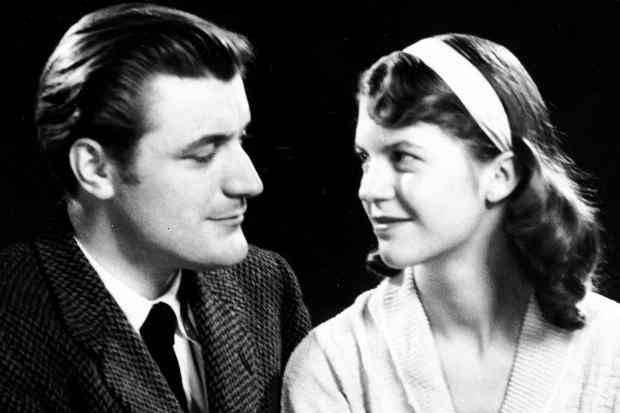
“No matter what the ideas or conduct of others, there is a unique rightness and beauty to life which can be shared in openness, in wind and sunlight, with a fellow human being who believes in the same basic principles.”
19-Year-Old Sylvia Plath on the Transcendent Simplicity and Reverence of Nature
Brain Pickings
Suscribirse a:
Entradas (Atom)